


ASVAB Practice Test 2026 Prep
4.2999.00 Reviews
App Specs
- Version
- 1.2.0
- Updated On
- License
- Free
- Downloads
- 100,000+
- Developer
- Best Fun Games, LLC
- Categories
- Education
- Platform
- Android
Screenshots
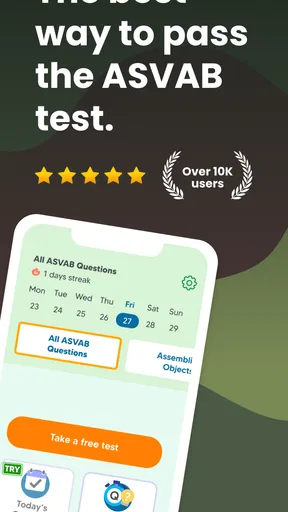
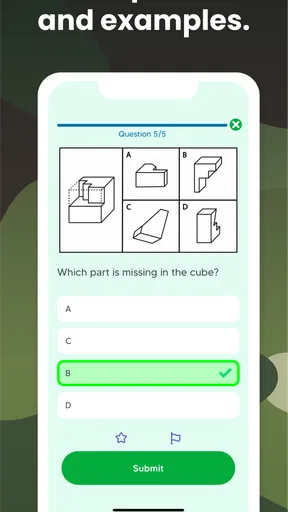
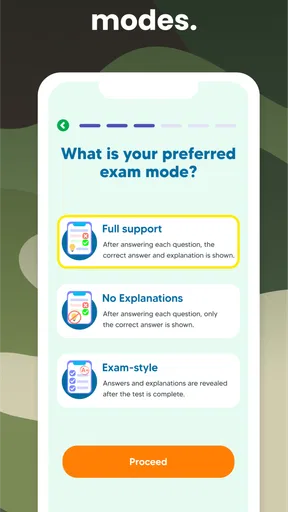
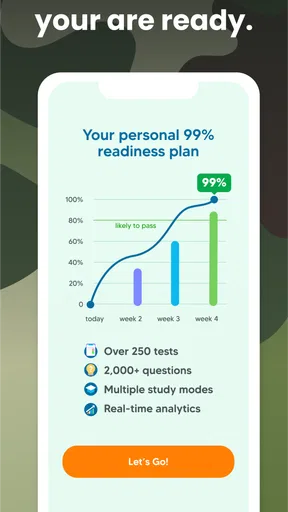
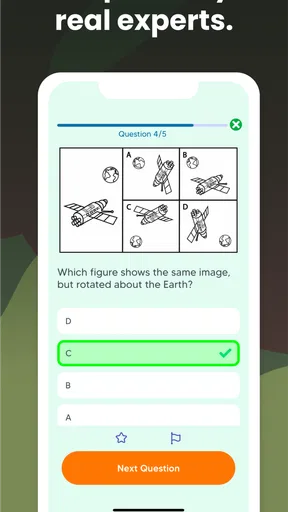
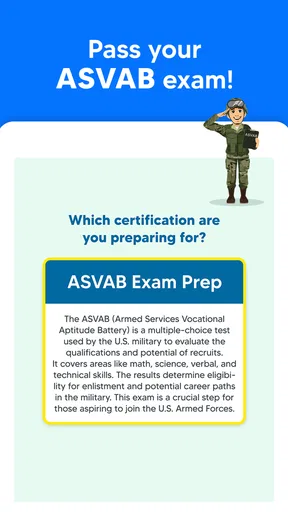
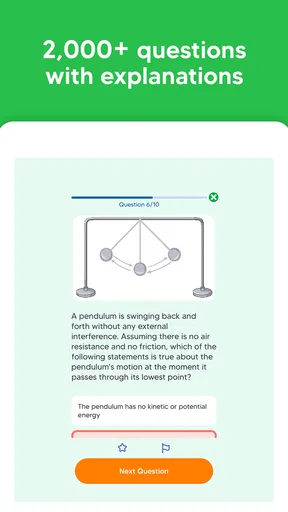
 Analysis by AppCompare
Preparing for the ASVAB can feel awkward because the test covers several different school subjects at once. You may be comfortable with arithmetic but rusty with vocabulary, or understand basic science while struggling to work quickly through word problems. I found ASVAB Practice Test 2026 Prep most useful as a way to turn that uncertainty into a repeatable study routine. It is an education app from Best Fun Games, LLC, built around ASVAB practice rather than general classroom learning.
The central idea is simple: open a practice session, answer questions, notice where I hesitate, and use that information to decide what to review next. That sounds ordinary, but the value is in making the process easy enough to repeat. The app is free to download, carries an Everyone content rating, and has reached over one hundred thousand installs. Its average rating is 4.2 from around four thousand ratings, which suggests that many learners find the format useful, although a rating alone cannot replace trying the study method yourself.
From a vague study goal to a workable routine
My starting condition with an app like this would not be “I need more information.” It would be “I need to know what deserves my limited study time.” That distinction matters. ASVAB preparation can quickly become a pile of unrelated notes, online explanations, flashcards, and timed quizzes. Without a clear handoff from one activity to the next, studying feels busy without necessarily becoming more effective.
This app fits best at the beginning of that process. I would use it first as a diagnostic tool, not as proof that I am ready. A short practice session can reveal whether my main problem is knowledge, reading speed, calculation, or simply rushing. Even when I answer correctly, a question that takes too long is worth marking mentally because the real test rewards both accuracy and efficient decision-making.
The app’s store summary focuses on passing the ASVAB on a first try, but I would treat that as an encouraging aim rather than a guarantee. No practice app can compensate for avoiding weak subjects or guessing through every session. The useful question is more practical: does each session tell me what to do differently tomorrow? In my experience, that is the standard that separates a helpful preparation tool from a collection of disposable quizzes.
How I would use the first session
I would begin without looking up answers. That gives the first session a genuine baseline. If I immediately study explanations before attempting questions, I may confuse recognition with recall. A cleaner workflow is to answer independently, keep moving when a question consumes too much time, and then examine the areas that caused the most uncertainty.
Afterward, I would divide mistakes into three groups: concepts I do not know, questions I understood but calculated incorrectly, and questions where I misread the wording. That simple separation is one of the most useful habits for this kind of exam. The remedy is different in each case. A missing concept needs review, a calculation error needs slower checking, and a reading error needs attention to units, comparisons, and qualifiers.
Worth Reading Before You Choose

EA SPORTS FC Mobile 26 Is a Bigger Football Game, but It Takes Time

Flipboard Shows What News Apps Must Do Beyond the Feed

Switching to Android Auto Means Rethinking Your Driving Routine

Google Calendar Makes a Crowded Week Easier to Manage

Ludo King Makes the Most of the Minutes Between Plans

Baby Panda World Brings Quick Play to Modern Phones, but Its Game Library Feels Busy
This is also where the app’s game-like practice approach can help learners who avoid textbooks. A question on a phone feels less demanding than opening a large study manual, so it is easier to begin during a spare moment. The trade-off is that a quick mobile session can become passive tapping if I never stop to understand why an answer was right or wrong. I would use the app to create questions for myself, then do the thinking away from the screen.
Turning individual questions into a study handoff
The most important handoff is from practice to review. I would not simply finish a quiz and start another one. Instead, I would write down the topic behind each uncertain answer in a separate notebook or notes app. For example, I might record that I need to revisit fractions, vocabulary in context, mechanical principles, or general science terms. The exact list will differ by learner, but the workflow stays useful because it converts vague discomfort into named tasks.
This approach prevents a common mistake: repeatedly practicing what already feels comfortable. Familiar subjects produce pleasant scores, yet they may contribute little to improvement. If I consistently choose easy questions, I am measuring confidence rather than building readiness. I would deliberately return to the sections that make me slow down, while still using occasional mixed practice so that I do not become dependent on knowing the subject before seeing the question.
A second non-obvious benefit is that the app can act as a bridge between long study sessions. Suppose I spend an evening reviewing a printed guide. The next morning, a short practice session can check whether that review survived overnight. If I miss the same type of question again, the handoff has failed, and I know that rereading is not enough. I need to solve examples, explain the rule in my own words, or ask a teacher for clarification.
A realistic day-to-day workflow
Imagine I am preparing around a full school or work schedule. On the bus, I complete a small practice session rather than attempting a full study block. At lunch, I review the few topics I noted as uncertain. In the evening, I use a textbook, class notes, or a trusted lesson to rebuild one weak area. The next day, I return to the app and check whether the same mistake appears again.
That workflow gives each tool a clear job. The app supplies retrieval practice and exposes hesitation. A book or teacher supplies deeper explanations. My notes preserve the handoff between them. If I use only the app, I may know which answers I miss without understanding the underlying lesson. If I use only a book, I may understand the material but fail to notice how I perform under question pressure.
I would also avoid treating every session as a competition with my previous score. A higher result can come from easier questions or from remembering a repeated item. Instead, I would track the quality of my decisions: Did I identify the relevant information? Did I eliminate unreasonable choices? Did I make a careless arithmetic error? This makes the practice more transferable to unfamiliar questions.
Where it fits beside traditional ASVAB resources
Compared with a printed ASVAB guide, this app is more convenient for short bursts and less suitable for detailed teaching. A book can explain a topic across several pages, show worked examples, and provide broader context. The app is better when I already know what I need to practice and want immediate interaction without carrying study material.
Compared with free web quizzes, a dedicated mobile app can feel more focused because it keeps preparation in one place. The disadvantage is that I should not assume every question reflects the exact wording, difficulty, or balance of the official examination. For that reason, I would pair it with current official guidance and at least one substantial study resource, especially when planning around test eligibility, scheduling, or score requirements.
Compared with private tutoring, the app is obviously more independent. That is a strength for learners who prefer to work alone and a weakness for anyone who needs immediate feedback on the reasoning behind an answer. A tutor can notice that I am applying the wrong method, while an app session may only show the outcome. I would choose tutoring or structured classes if I repeatedly miss a topic without understanding why.
What the free starting point really means
The app is free, which makes it easy to test the workflow before committing to it. That matters because preparation styles are personal. Some people learn well from rapid questions; others need diagrams, spoken explanations, or a teacher-led sequence. I would spend enough time to see whether the practice format changes my study behavior rather than deciding after one quick session.
There are in-app purchases priced from around twenty-five dollars to around ninety dollars per item. That is a significant range, so I would examine what an offered purchase adds before paying. I would not buy simply because I felt anxious about the exam. A paid option is worthwhile only if it supplies a clear benefit for my situation, such as more useful practice or a study structure I will genuinely follow. Since the free entry point already lets me judge whether the basic approach suits me, there is no reason to rush that decision.
This is an important friction point in the handoff from trying the app to relying on it. A learner may mistake payment for progress. In reality, a larger question bank or extra material cannot fix inconsistent study habits. I would first establish a routine, identify a recurring weakness, and then decide whether an upgrade addresses that specific problem.
Device fit, version, and practical expectations
The app requires Android 6.0 or later, so it is accessible on many older Android phones, although the experience will still depend on the device itself. Its current version is 1.2.0. I would keep the app updated through the normal store process, particularly during a long preparation period, but I would also maintain my own notes rather than trusting a phone app to be the only record of my progress.
Because this is a mobile study tool, I would plan around interruptions. A short session can be useful, but a notification, crowded commute, or low battery can break concentration. For difficult subjects, I would choose a quiet period and use paper for calculations. Doing every problem mentally on a small screen is not a clever shortcut if it increases careless errors.
The Everyone rating makes the app suitable for a broad audience from a content perspective. That does not mean every learner will find the material equally comfortable. Someone returning to mathematics after many years may need slower instruction, while a student already scoring strongly may want advanced, exam-specific analysis. The age rating describes accessibility, not the depth of preparation each person requires.
Where the workflow breaks down
The biggest weakness is the risk of mistaking repeated practice for complete preparation. If I keep seeing similar question patterns, I may become good at recognizing the app’s style rather than solving new problems. I would protect against that by changing my review source, solving unfamiliar examples, and occasionally practicing without the phone.
Another break occurs when a wrong answer is treated as a score problem instead of a learning signal. A result tells me that something happened; it does not automatically explain the cause. If the app does not give me enough explanation for a difficult item, I would stop and find a dependable lesson elsewhere. Continuing to tap through questions at that point creates activity, not understanding.
There is also a motivational trap. The promise of passing on the first try can encourage urgency, but it may create unrealistic pressure for learners who need a longer preparation cycle. I would use the app to build evidence of improvement, not to make a prediction about my future result. If practice remains uneven, the sensible response is to adjust the plan, not to purchase more material impulsively.
I would skip this app as my main resource if I need a complete course with extensive explanations, instructor support, or a carefully sequenced curriculum. It is also not the right choice for someone who dislikes studying on a phone or who needs accessibility features that the app does not provide for their personal situation. In those cases, a printed guide, classroom program, tutor, or official preparation resource may be a better foundation.
My outcome after using it as part of a larger plan
Used properly, the app’s result is not merely a quiz score. The more valuable outcome is a clearer map of what I know, what I only recognize, and what still slows me down. That map makes the rest of my preparation more efficient because I can hand specific topics to a book, instructor, or focused practice session instead of studying everything equally.
I would recommend it to an independent learner who wants a convenient ASVAB practice routine, especially someone who needs help getting started or staying consistent. I would be more cautious about recommending it as a single source for a high-stakes test. Its strongest role is the repeated checkpoint between deeper study sessions, not a replacement for them.
Best Fun Games, LLC has positioned this free education app for accessible, question-based preparation, and the broad adoption reflected by over one hundred thousand installs shows that the format has found an audience. My honest view is that its usefulness depends less on how many sessions I complete and more on what I do after each one. If I record weaknesses, review the underlying ideas, and return to test retention, it becomes a practical part of my ASVAB plan. If I only chase quick scores, it is easy to finish many sessions without becoming better prepared.
For me, the deciding question is simple: do I need a low-friction way to practice and discover weak areas? If yes, ASVAB Practice Test 2026 Prep is worth trying before considering any purchase. If I need detailed teaching, personal correction, or certainty that practice mirrors every part of the official test, I would combine it with stronger outside resources. That balanced role—practice first, explanation elsewhere, and regular review between the two—is where this app makes the most sense.
Pros
- Covers core ASVAB sections with focused practice questions.
- Timed quizzes help users build speed and improve test-day pacing.
- Explanations make it easier to review mistakes and understand answers.
- Progress tracking highlights strengths and subjects needing more study.
- Works well for short study sessions during commutes or breaks.
Cons
- Some advanced features may require a paid subscription.
- Practice quality can vary between different subject categories.
- It does not replace official ASVAB guidance or recruiter advice.
- Repeated questions may reduce its value after extended daily use.
- A stable internet connection may be needed for some app features.
FAQs for ASVAB Practice Test 2026 Prep
What is ASVAB Practice Test 2026 Prep, and who is it designed for?
ASVAB Practice Test 2026 Prep is a study app designed for people preparing to take the Armed Services Vocational Aptitude Battery. It typically provides practice questions, subject-based quizzes, explanations, and mock exams covering areas such as arithmetic reasoning, mathematics knowledge, word knowledge, paragraph comprehension, science, and mechanical topics. It can be useful for first-time test takers and applicants who want structured revision on a phone or tablet.
Does the app cover all sections of the ASVAB?
The app is intended to help users review the major ASVAB subject areas, but the exact sections and question distribution may depend on the current version of the application. Before relying on it as your only study resource, compare its contents with the official ASVAB requirements and the format of the test you plan to take. Practice apps are helpful for preparation, but they should supplement official guidance rather than replace it.
Are the practice questions similar to the real ASVAB?
The questions are designed to reflect the types of skills tested on the ASVAB, including numerical reasoning, vocabulary, reading comprehension, and technical knowledge. However, practice questions should not be treated as official test questions or a guarantee of the exact difficulty and wording you will encounter. The most valuable feature is usually the repeated practice, timed quizzes, explanations, and ability to identify subjects that require additional study.
Can I use ASVAB Practice Test 2026 Prep without an internet connection?
Offline availability can vary depending on the feature and the version installed on your Android or iOS device. Some apps allow previously downloaded questions or study materials to be used without a connection, while progress synchronization, advertisements, updates, or certain premium tools may require internet access. It is a good idea to open the app once online, review its download settings, and test offline access before studying in an area with limited connectivity.
Is ASVAB Practice Test 2026 Prep free to download and use?
The application may be free to install while offering optional in-app purchases, subscriptions, advertisements, or premium study content. Free access can still provide useful quizzes, but advanced mock exams, detailed explanations, performance statistics, or ad-free use may be restricted. Check the store listing and the in-app purchase screen before subscribing, and confirm the renewal terms so you understand the total cost and cancellation process.


